
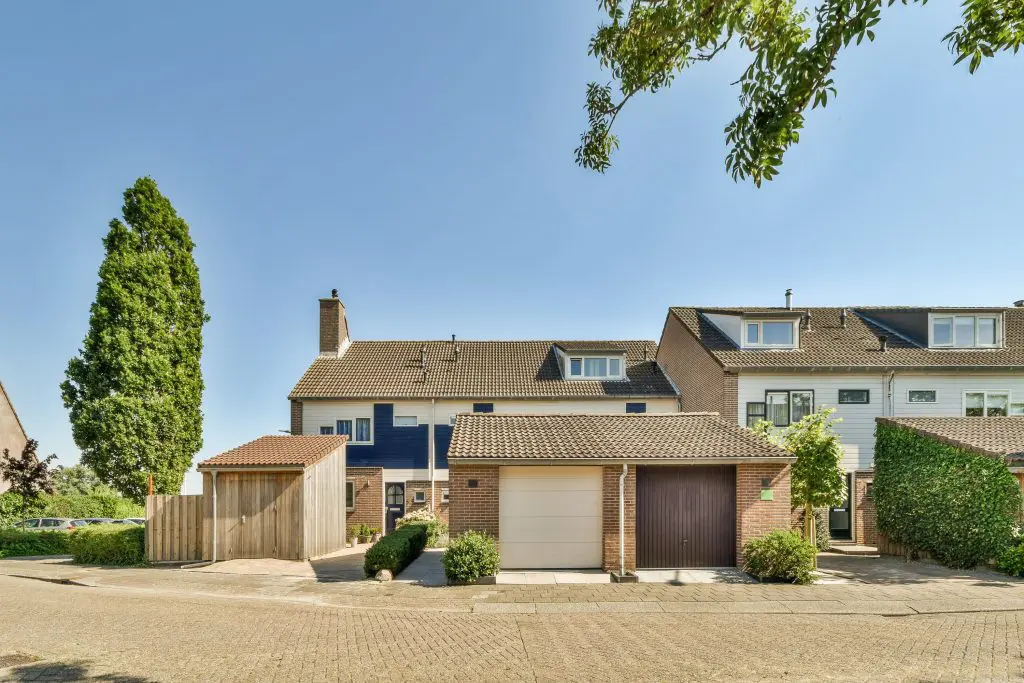
Your house might be worth $900,000. Your mortgage might be down to $500,000.
On paper, that leaves $400,000 between the two.
That does not mean you have $400,000 sitting there ready to spend.
But it does mean you have equity, and depending on your income, existing mortgage and lender criteria, some of that equity may be available to support additional borrowing.
People use property-backed borrowing for everything from major renovations and extensions to buying a car, consolidating debt or funding another large expense.
There is one important distinction to understand first.
Borrowing against your property is normally done through a mortgage lender as a home-loan top-up, refinance or separate home-loan facility. Lending Room does not provide mortgages. If you are looking for up to $250,000 without restructuring your mortgage, Lending Room can instead assess personal, renovation and secured-loan options through its lender panel.
Those are different forms of finance, with different risks.
What does using your property as security actually mean?
A secured loan gives the lender an asset it can rely on if you stop making repayments.
With a mortgage, that asset is your property.
You still own and live in the house. The lender does not take possession of it just because you borrow against it.
But the property legally secures the debt.
That additional security is one reason mortgage rates are generally lower than rates on unsecured personal loans or credit cards.
There is an obvious trade-off.
If you cannot meet the repayments, your home is ultimately at risk.
That is why a lower interest rate should never be the only thing you look at when deciding whether to move more debt onto your property.
What is home equity?
Equity is the difference between what your property is worth and what you owe against it.
Say your home is worth $850,000 and your mortgage balance is $500,000.
Your total equity is:
$850,000 property value
minus $500,000 mortgage
equals $350,000 equity.
Simple enough.
But total equity is not the same thing as usable equity.
Your lender will normally want you to retain a certain amount of equity in the property after any additional borrowing. It will also reassess whether you can afford the larger loan.
So even though you have $350,000 of equity on paper, you may only be able to borrow against part of it.
How much can you borrow against your property?
There is no automatic figure.
The amount depends on things such as:
- Your property’s current value
- Your existing mortgage balance
- Your income
- Household expenses
- Other loans and credit limits
- Your credit history
- What the money is for
- The lender’s loan-to-value ratio requirements
- Whether the property is owner-occupied or an investment
- Your ability to service the increased repayments
Some mainstream lenders generally want owner-occupiers to retain around 20% equity for standard top-up lending, although individual policies and exceptions differ.
That means a homeowner with substantial equity can still be declined if their income does not comfortably support another $100,000 of borrowing.
Equity gets you through one part of the assessment.
Affordability gets you through the other.
What can you use home equity for?
Property-backed borrowing is not limited to buying another property.
Subject to lender approval, homeowners may use additional mortgage borrowing for purposes including:
- Home renovations
- Extensions or additions
- Buying a vehicle
- Debt consolidation
- Major repairs
- Helping fund another property purchase
- Business purposes
- Large one-off expenses
Your lender will want to know what the money is for.
The fact that equity exists does not mean every borrowing purpose will automatically be approved.
Can you use equity to buy a car?
Potentially, yes.
A home-loan top-up can sometimes be used to buy a vehicle.
This can look attractive because a mortgage rate will generally be lower than a standard car-loan rate.
But this is where repayment term matters.
Say you borrow $40,000 to buy a car.
A normal vehicle loan might be repaid over four or five years.
Add that same $40,000 to a mortgage with 20 years remaining and the required repayment could look dramatically lower.
That does not automatically make it cheaper.
Cars depreciate quickly. You do not want to be paying for today’s vehicle long after you have sold or replaced it.
If you use home equity to finance a car, keeping that borrowing on its own shorter repayment schedule can prevent a five-year purchase from becoming a 20-year debt.
Can you borrow against your house to renovate?
Yes, provided you have enough usable equity and meet your lender’s affordability criteria.
Renovations are one of the most common reasons homeowners look at their equity.
A relatively small top-up might fund:
- A kitchen
- Bathroom
- New flooring
- Roofing
- Landscaping
- Insulation
- Heat pumps
A larger facility might be used for:
- An extension
- Additional bedroom
- Garage
- Major structural work
- Full property renovation
For significant building projects, finance may work differently.
Rather than handing you the entire approved amount upfront, a lender may release funds in stages as the work progresses. These staged payments are generally known as drawdowns or progress payments.
The lender may also request plans, council consent, a fixed-price building contract or a valuation before approving substantial renovation lending.
Do you have to use your property to borrow for renovations?
No.
This is an important point because borrowing against your home is only one option.
Lending Room offers home renovation loans from $3,000 to $250,000 through its lender panel.
These are separate from your mortgage.
Unsecured options do not require your home to be used as security. Secured personal-loan options may use another acceptable asset, such as a vehicle, depending on the lender.
That can be useful if:
- You do not have enough usable home equity
- You do not want to refinance your mortgage
- You want the renovation debt on a shorter fixed term
- You want to keep your home out of the security arrangement
- The project is not large enough to justify restructuring your home loan
The trade-off is that personal-loan interest rates are generally higher than mortgage rates.
Again, compare the total cost rather than just the percentage.
Home equity vs a secured personal loan
The word “secured” gets used for both, but they are not the same thing.
Borrowing against your home
Your property secures the debt.
This will generally be arranged through a bank, mortgage lender or mortgage adviser as additional home lending.
Mortgage interest rates are usually lower, but the debt can easily get stretched over a long term.
Your home is also directly involved in the security arrangement.
Secured personal loan
A secured personal loan can use another acceptable asset.
Lending Room’s secured loan panel currently works with security such as:
- Cars
- Trucks and vans
- Motorcycles
- Boats and jetskis
- Caravans and motorhomes
- Some business equipment
- Other eligible registered assets
Secured loans through Lending Room range from $3,000 to $250,000 over terms from 6 to 84 months.
Rates currently start from 8.99% p.a. (AIR), subject to your credit profile, loan amount, term, security and lender criteria.
Your house is not listed by Lending Room as security for this product.
That distinction matters.
So where does the $250,000 figure come in?
If you specifically borrow against your property, the amount available will be determined by your mortgage lender based on your equity and servicing position.
There is no universal $250,000 property-equity limit.
Separately, Lending Room can arrange eligible personal, secured and renovation loans from $3,000 up to $250,000 through its panel.
For someone planning a $150,000 renovation, for example, there may therefore be two very different routes to investigate:
- Ask a mortgage lender whether sufficient home equity is available for a top-up.
- Compare separate renovation or secured finance without adding the project to the mortgage.
The correct comparison is not simply “which has the lowest rate?”
It is:
- What will the regular repayments be?
- How long will the debt last?
- What security is at risk?
- What fees apply?
- What will the borrowing cost in total?
The biggest trap when borrowing against your house
The interest rate gets all the attention.
The loan term is what catches people.
Suppose you need $50,000 for a renovation.
A separate $50,000 loan over five years may have a higher interest rate but force you to clear the debt within five years.
Adding the same $50,000 to a 25-year mortgage can give you a much lower rate and a much smaller required repayment.
It also gives that debt 25 years to accumulate interest.
You can end up paying more for the renovation despite having borrowed at a substantially lower rate.
That does not mean using home equity is a bad idea.
It means you need to structure it properly.
If you top up your mortgage, ask whether the new borrowing can sit in a separate loan portion and be repaid over a shorter period.
Do not automatically give a new kitchen the same repayment date as the house itself.
Can you use property equity to consolidate debt?
Potentially.
Moving credit cards or personal loans onto a lower mortgage rate can reduce the interest being charged.
But the same term problem applies.
Take a $20,000 personal loan with three years remaining and stretch it across another 20 years of mortgage repayments and you have solved the interest-rate problem while potentially creating a repayment-term problem.
There is another difference.
Credit cards and many personal loans are unsecured.
Once those debts are absorbed into the mortgage, your home is now securing them.
That changes the risk attached to the debt.
If consolidation is the goal, it is also worth comparing a separate debt consolidation loan so you can see what both structures cost before committing.
What if you own your property mortgage-free?
Owning the house outright does not mean you can simply withdraw cash from it.
You still need a lender to approve the borrowing.
In effect, you would be taking out lending secured against a property that currently has no mortgage.
The lender will still assess:
- Your income
- Expenses
- Age and circumstances
- Credit history
- Loan purpose
- Property value
- Ability to meet repayments
A debt-free house can provide strong security.
It does not remove responsible lending requirements.
What if you do not have enough equity?
Then property-backed borrowing may not be available.
That does not necessarily mean the project has to stop.
Depending on the amount and purpose, alternatives can include:
- An unsecured personal loan
- A secured loan against another eligible asset
- A dedicated renovation loan
- Saving part of the cost and borrowing the remainder
- Reducing the initial project scope
- Completing work in stages
Lending Room’s renovation and personal loan panel provides both secured and unsecured options up to $250,000, subject to approval.
For some borrowers, keeping a renovation separate from the mortgage can also make it much clearer how quickly the project itself is being paid off.
What should you compare before using property as security?
Do not compare rates in isolation.
Put the full numbers beside each other.
Check:
- Amount borrowed
- Interest rate
- Loan term
- Weekly, fortnightly or monthly repayment
- Total interest
- Total amount repayable
- Application or establishment fees
- Valuation costs
- Legal costs
- Mortgage break or restructure costs
- Which asset is being used as security
- Whether you can repay extra without penalties
- What happens if your income changes
You are trying to answer one question:
What does this borrowing actually cost me from the day I take it out until the day it is gone?
That number is far more useful than the headline rate.
How Lending Room fits in
Lending Room is a registered finance broker, not a mortgage lender.
We do not arrange a mortgage against your property.
What we can do is assess whether separate personal, secured or renovation finance could fund what you need without restructuring your home loan.
One application gives us what we need to assess your profile against multiple vetted lenders.
Our initial assessment uses a soft credit check, so our check does not affect your credit score.
Secured and unsecured options range from $3,000 to $250,000, with terms from 6 to 84 months. Secured rates currently start from 8.99% p.a. (AIR) and unsecured rates from 10.99% p.a., subject to lender criteria.
If you are weighing up a mortgage top-up against keeping the new borrowing separate, get in touch with the Lending Room team. We can explain what non-mortgage loan options are realistically available so you have something concrete to compare against your home-loan option.
This article is for general information only and does not constitute financial advice. Lending Room is a registered financial services provider (FSP486566). We are a broker and do not lend directly or provide mortgages. Personal, renovation and secured loans through our lender panel range from $3,000 to $250,000. Rates range from 8.99% to 29.95% p.a. (AIR). Secured rates start from 8.99% p.a. and unsecured rates from 10.99% p.a. Establishment fees up to $450 and broker fees up to $1,500 may apply. Your rate and approval are subject to lender credit criteria.